Sahara Desert Tour from Marrakech: Everything You Need To Know & Avoiding Common Scams
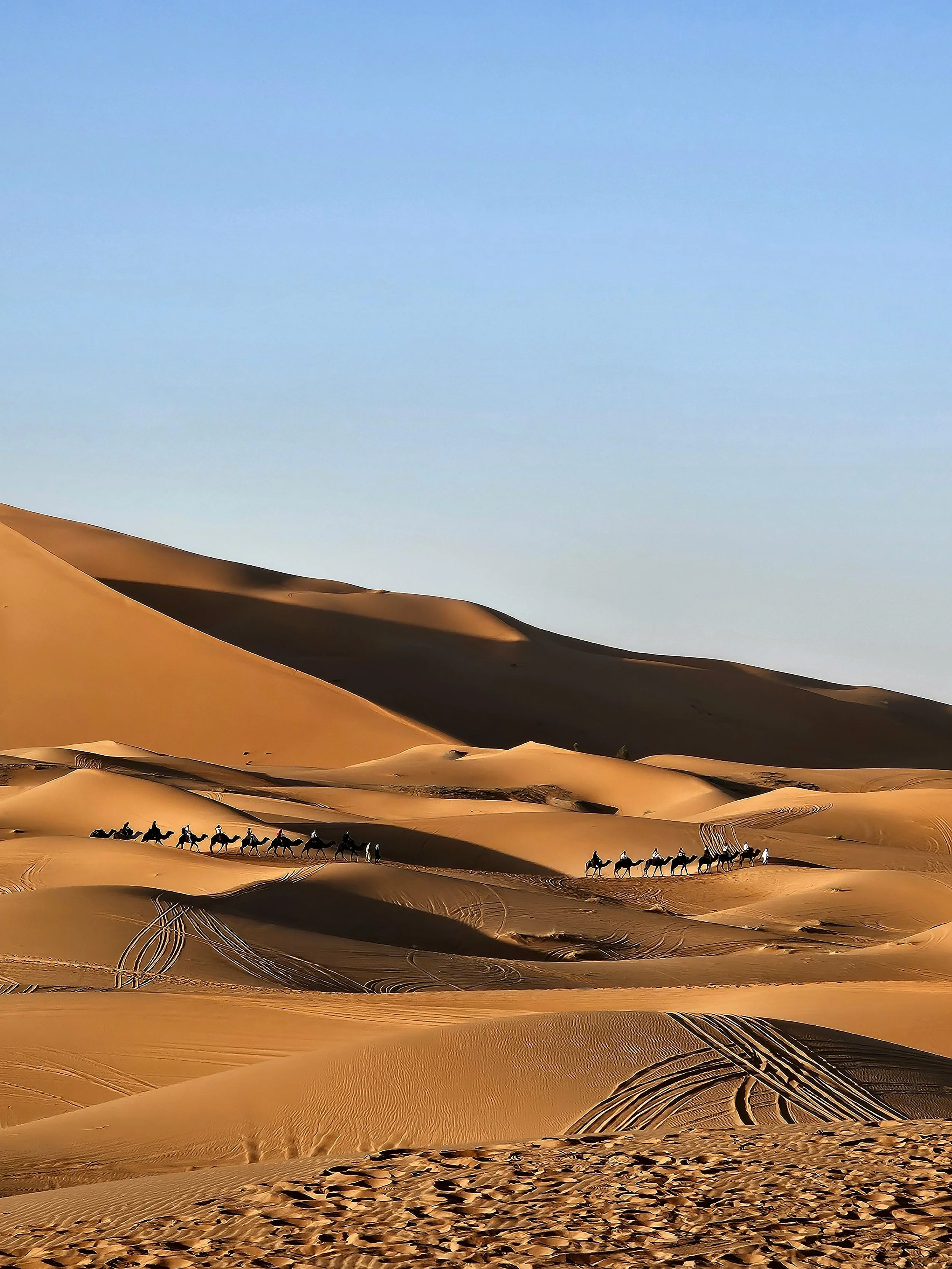
Camels trekking across the Sahara while we waited by the 4×4’s
Crossing endless dunes, watching the sun melt into the sand, and sleeping under a blanket of desert stars. Visiting the Sahara Desert was one of those travel experiences that truly took our breath away.
If you’re planning a trip to Morocco, adding a Sahara Desert tour to your itinerary is an absolute must and worth the long trip it will take to get out there.
We’re breaking it all down, based on Jesse’s and I own experience, to help you plan the perfect Sahara Desert adventure without unnecessary stress.
Everything You Need To Know about The Sahara Desert (Quick Overview):
How to get to the Sahara Desert from Marrakech
What it’s like crossing the desert
Crossing the Sahara in the Morning
How long to stay in the Sahara
What to wear in the Sahara Desert
Choosing the right desert camp
Common scams & what to watch for
Our honest tips
How to Get to the Sahara Desert from Marrakech
There are two options when it comes to getting to the Sahara Desert from Marrakech. I’ll be honest I was really partial to option one, as I get bad motion sickness and the thought of being on a bus for 10 hours a day terrified me. But after completing this trip, I was actually glad we opted for the bus.
Option 1: Renting a car and driving yourself.
While you absolutely can do this, we don’t really advise it. Navigating Morocco’s roads, mountain passes, and desert routes is not something we’d recommend if you’re not used to traveling to countries like Morocco. There were a few sections where we were gripping the bus seats and praying we didn’t drop off the side of the mountain. A guided tour removes all the logistical headaches and takes the stress of driving out of your hands.
Option 2: By bus.
The most common way to visit the Sahara Desert is by booking a guided multi-day tour from Marrakech to Merzouga (the gateway town to the Erg Chebbi dunes).
Our original thought process was that we didn’t have a car reserved for any other part of this trip, and having to book one just for the desert meant extra fees and extra headaches. In the end, we were glad we went with this option and besides, we got to meet some interesting people and stop at places we didn’t even know were along the route.
Most travellers choose either:
2-day / 1-night Sahara tour
3-day / 2-night Sahara tour
We strongly recommend the 3-day tour. The drive from Marrakech to Merzouga is long (around 9–10 hours total), and the extra day makes the journey far more enjoyable instead of rushed.
Your tour will typically include:
Hotel pickup in Marrakech
Transportation in a small group minibus
Mulitple stops along the way
Two hotel overnights en route
Camel trek into the desert
Overnight desert camp
Transportation back
What the Drive Is Like
Once you’re settled into the bus and the drive begins, you’re in for a good time. Crossing Morocco on your way to the Sahara is an adventure in itself and one you shouldn’t overlook.
Admittedly, and probably like a lot of other travellers, we were dreading the drive but you really shouldn’t. Every few hours the bus made stops for viewpoints or food, and we saw some seriously cool stuff along the way.
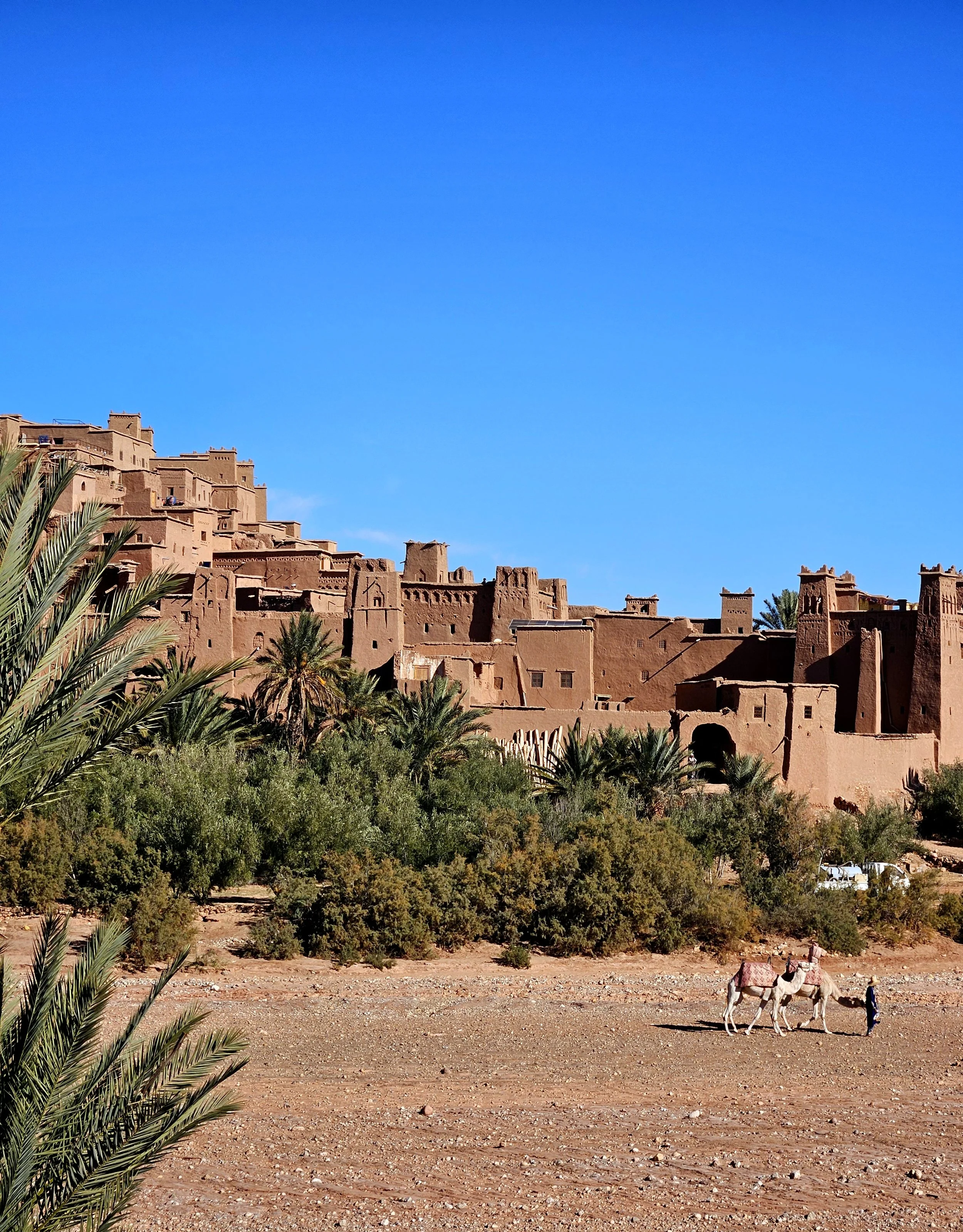
One of the stops along the way -you get to explore the traditional Berber village
You’ll pass through:
The Atlas Mountains
Traditional Berber villages
Desert valleys and palm oases
Endless stretches of arid landscape
When you choose the type of tour you want, you’ll also get to pick the type of hotel rooms you want to pay for along the way. We decided to pay for the cheapest option, as we didn’t feel it was necessary to splurge on a room we’d only be sleeping in for a few hours before leaving at first light.
We stand by this choice, but it wasn’t glamorous. While the outside of the hotels looked like castles, the rooms were simply a bed and a fireplace that we weren’t allowed to use — even though we were traveling in December and it was freezing.
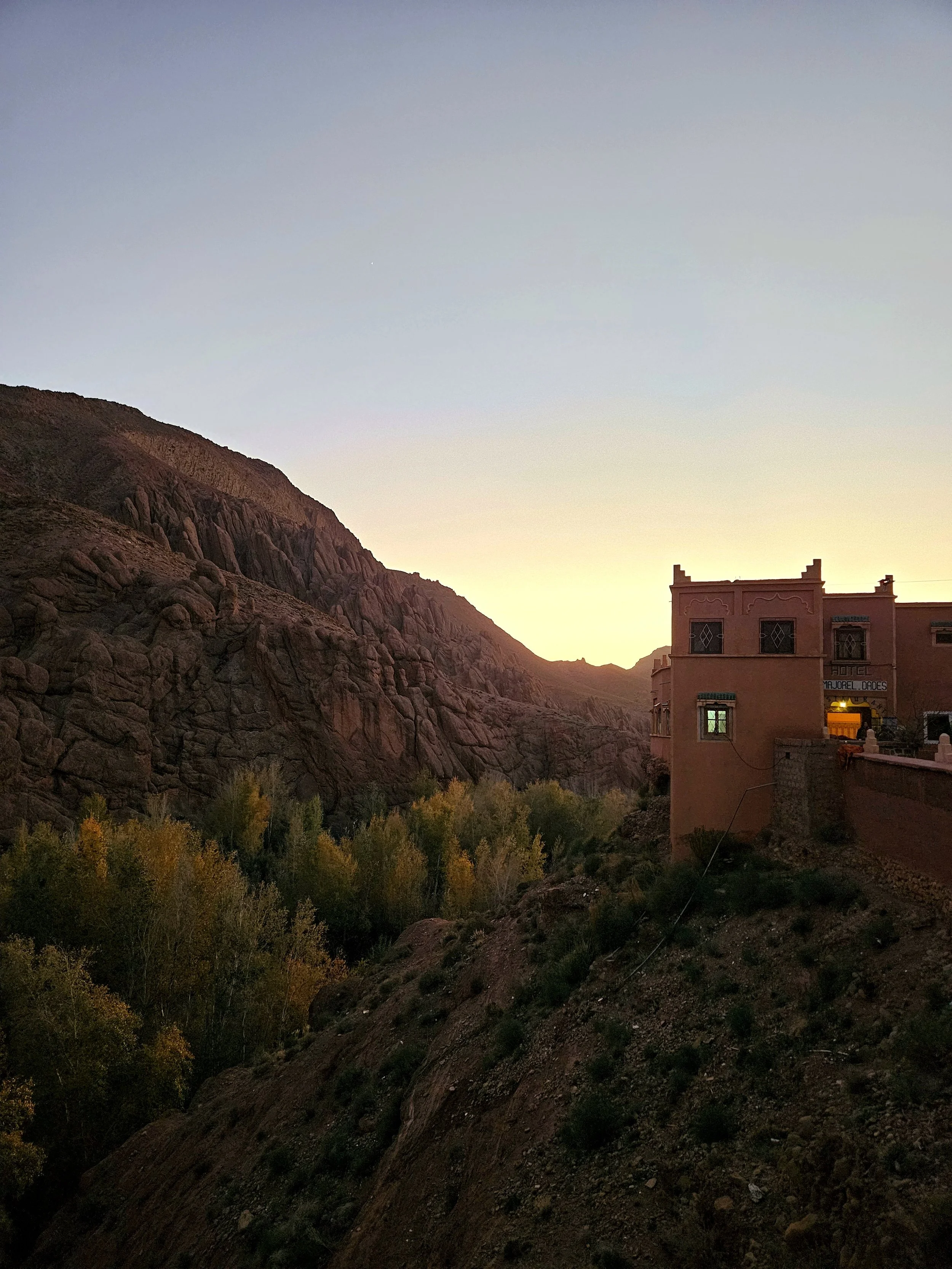
One of the hotels we stayed at - looks just like a castle
By the time you reach Merzouga, you’re tired… but excited in the best possible way.
Entering the Sahara: Camel Trek or 4x4
When you get dropped off by the bus, you’ll be greeted by the camp guides who will help bring you across the Sahara and to your camp. I’ll go into more detail in later sections, but long story short, Jesse and I got scammed by our head camp guide and that really soured our experience from the start.
In order to get everyone across the desert, there will be a lineup of camels and a few 4x4s. Seeing the state the camels were in, we didn’t really feel like it was the right thing to do to ride them. I don’t know if this was specific to our guides, but we didn’t get the choice to pick. They randomly started grabbing people and putting them on camels. Once all the camels were loaded, anyone else left standing had to get into the 4x4s. This ended up being us, and we weren’t overly upset about it.
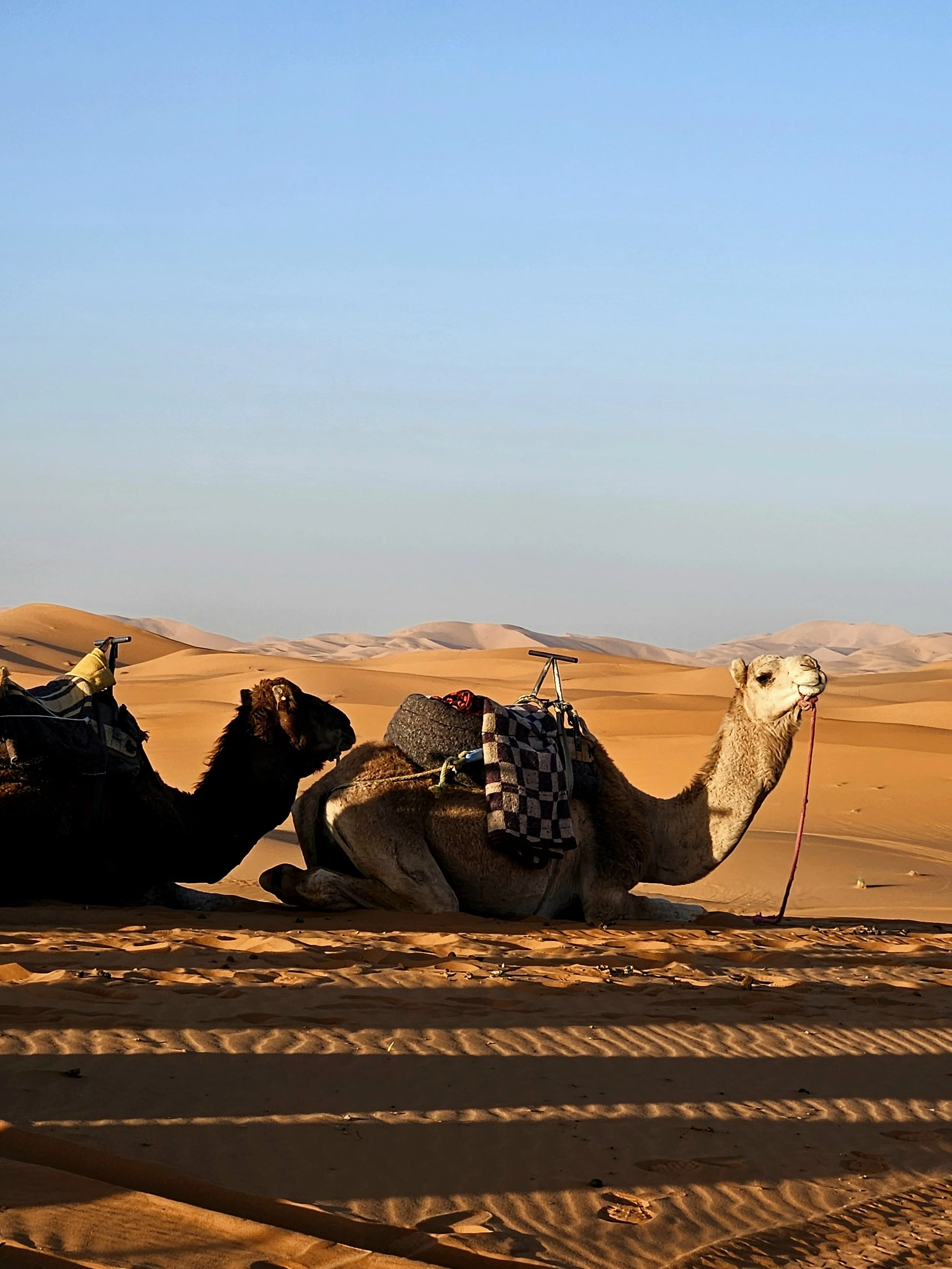
Camels resting at the midway point
Crossing the desert in a 4x4 is a terrifying thrill — talk about Tokyo drift!
Halfway across, they stopped to let people take photos, and anyone previously in a car was exchanged with someone on a camel. No one was allowed to opt out of this, so we got on the camels.
While it felt like a bucket-list item we were checking off, it was extremely uncomfortable. The camels were slipping down the sides of the dunes and you’re hanging onto the handles with everything you’ve got just to avoid falling off. At one point, Jesse’s camel behind me even threw up all over my pants. Another sign of these animals being overworked.
When we talked about it later that night, we decided that no matter what, we wouldn’t be getting back on a camel. Our guilt couldn’t take it.
The trek across took about two hours in total.
What It’s Like Staying in the Sahara Desert
Staying in the Sahara Desert is surreal. We were constantly in awe and trying to stay present, really soaking it all in. This was my second desert experience (I also visited Wadi Rum in Jordan), and the never-ending sand dunes here were somehow even cooler.
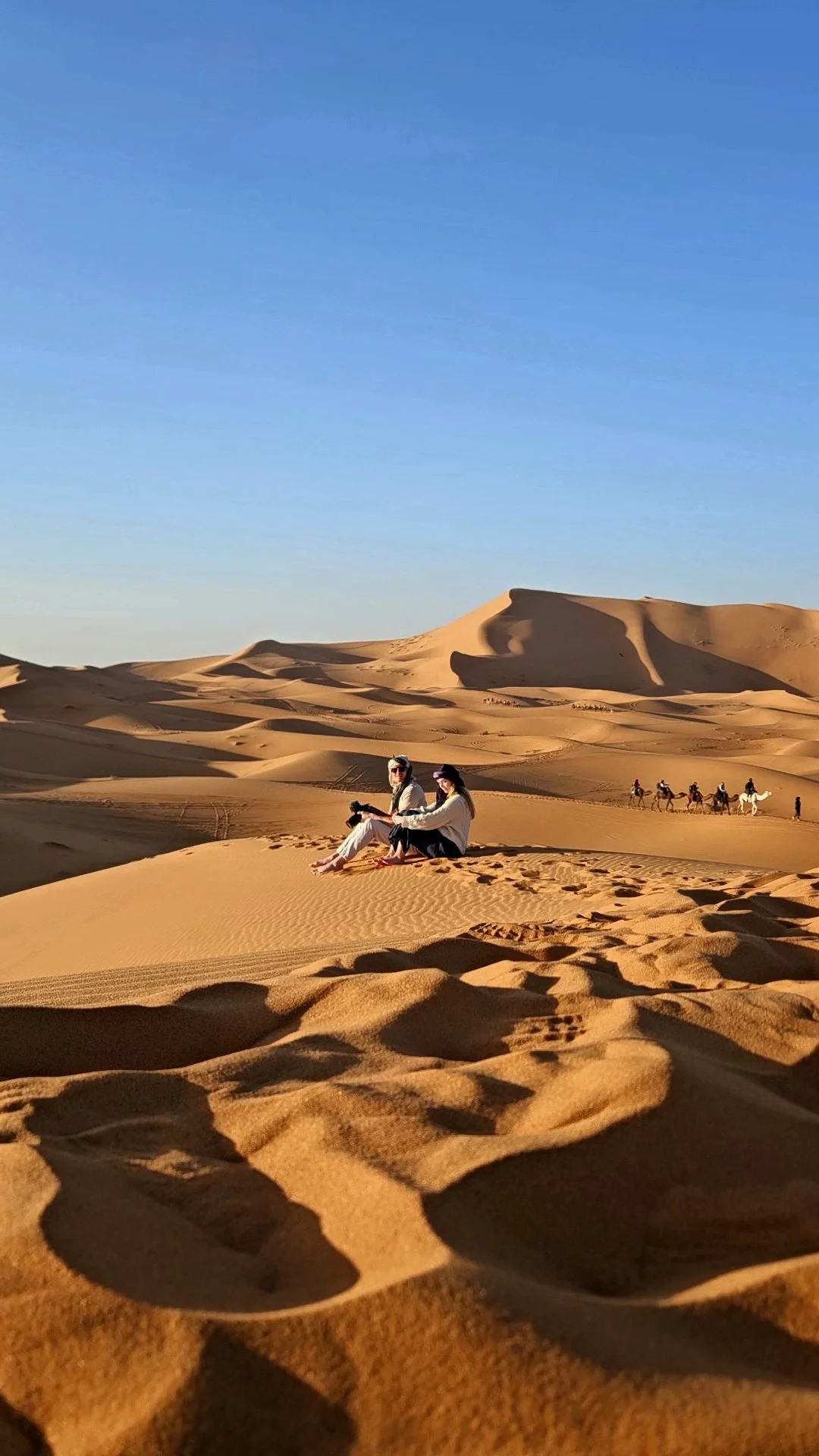
Getting our photos before the sun goes down!
Once the sun sets and the tour groups settle in, the desert becomes incredibly quiet. With almost zero light pollution, the stars feel endless.
Most camps include:
Private or shared tents
Beds with blankets
Dinner and breakfast
Campfire gathering
Traditional music & drumming
When we arrived, our camp guides took inventory of everyone and assigned rooms. They said dinner would be in an hour, and then they walked away.
Jumping back to Jesse and I being scammed, we booked our tour through a tour office in the main market area of Marrakech. We paid for two nights in a luxury-range campsite (there are usually three tiers you can choose from). Not only were we scammed out of our second night stay (I’ll touch on this later), but when we headed to our tent, we realized we were also scammed out of the luxury-range camp and got mid-range instead.
The tent wasn’t well maintained, the bed was rock hard, and the bathroom had no water. Our campsite had no shared facilities, meaning we only had access to the bathroom inside our tent. With no water, we couldn’t flush the toilet or take a shower. Crossing the desert, you’re going to be covered in sand so having no way to wash was extremely disappointing. Thankfully, we had packed body wipes.
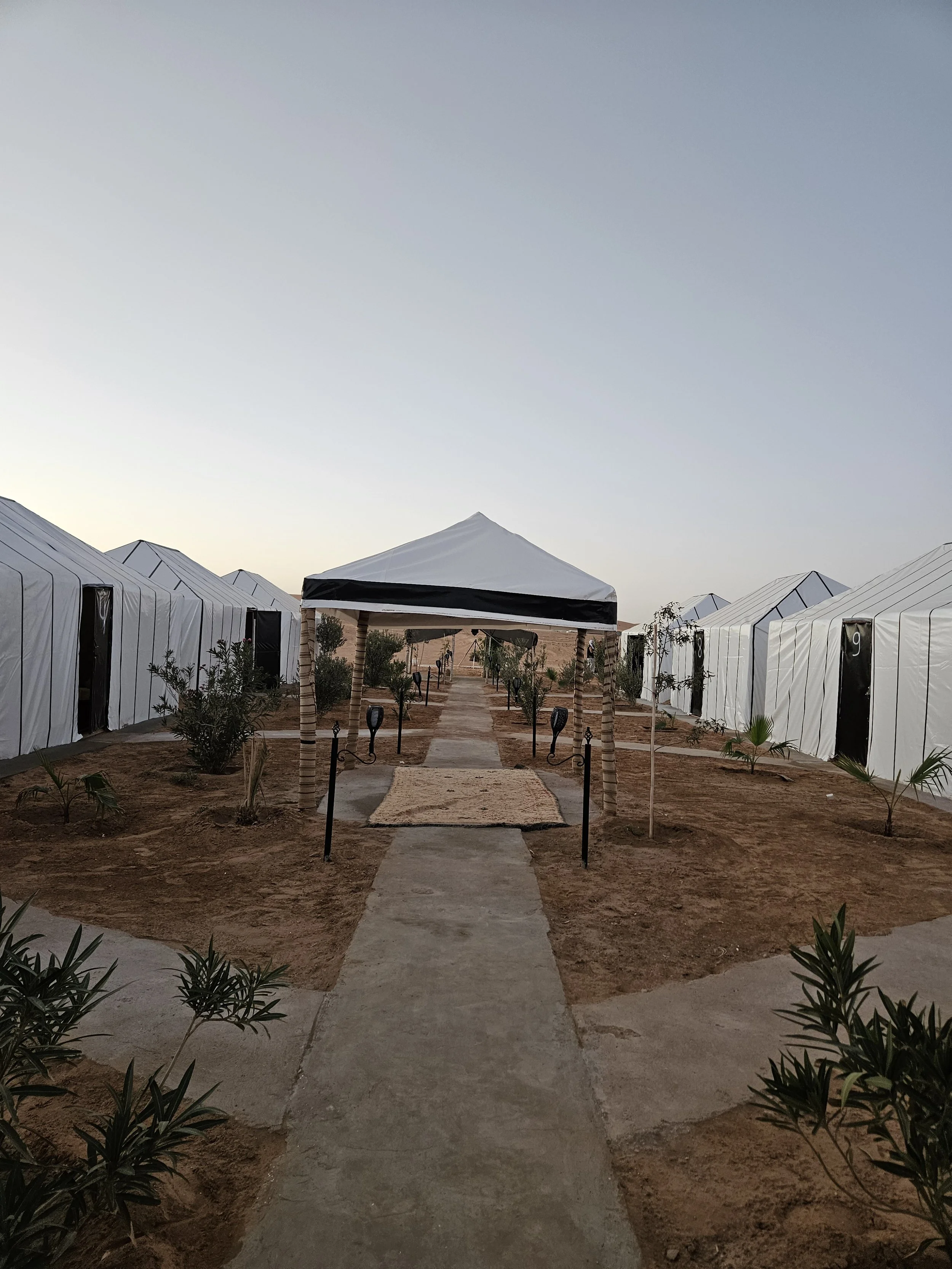
Our campsite in the desert
When dinner was announced everyone walked over to the dining hall and was served meat and potatoes. We sat next to a super interesting older couple, and listening to their travel stories ended up being a highlight of the night.
Make sure you bring all the water you’re going to drink during this stay. Our campsite did not provide any drinkable water. The only water available was what you brought yourself. This was never mentioned beforehand, and Jesse and I found ourselves going to bed with no water left for the next day.
Crossing the Sahara in the Morning
Because of the long drive back, the morning call time is 5am. As mentioned, Jesse and I refused to get back on the camels, and unsurprisingly, a lot of other people felt the same.
I don’t know if it was because our guide was angry at us, but he wouldn’t let anyone into the 4x4s and sent them back across the desert empty. He said, “If you don’t get on a camel, you’ll be forced to walk.” So we all walked.
Lined up behind the camels, we started trekking through the pitch black. Let’s just say this was one of the most physically demanding things we’ve ever done and we’re fit people.
Camels walk FAST. We were basically speed-walking to keep up. On top of that, you’re balancing on soft sand dunes and your shoes are constantly filling with sand. There are no flat surfaces, which means for two straight hours we were climbing up and down dunes. And remember we also had no water.
Not once did our guides check to make sure everyone was still there, so we took it upon ourselves to keep track of each other. Can you imagine being left behind in the Sahara with no idea which direction to go?
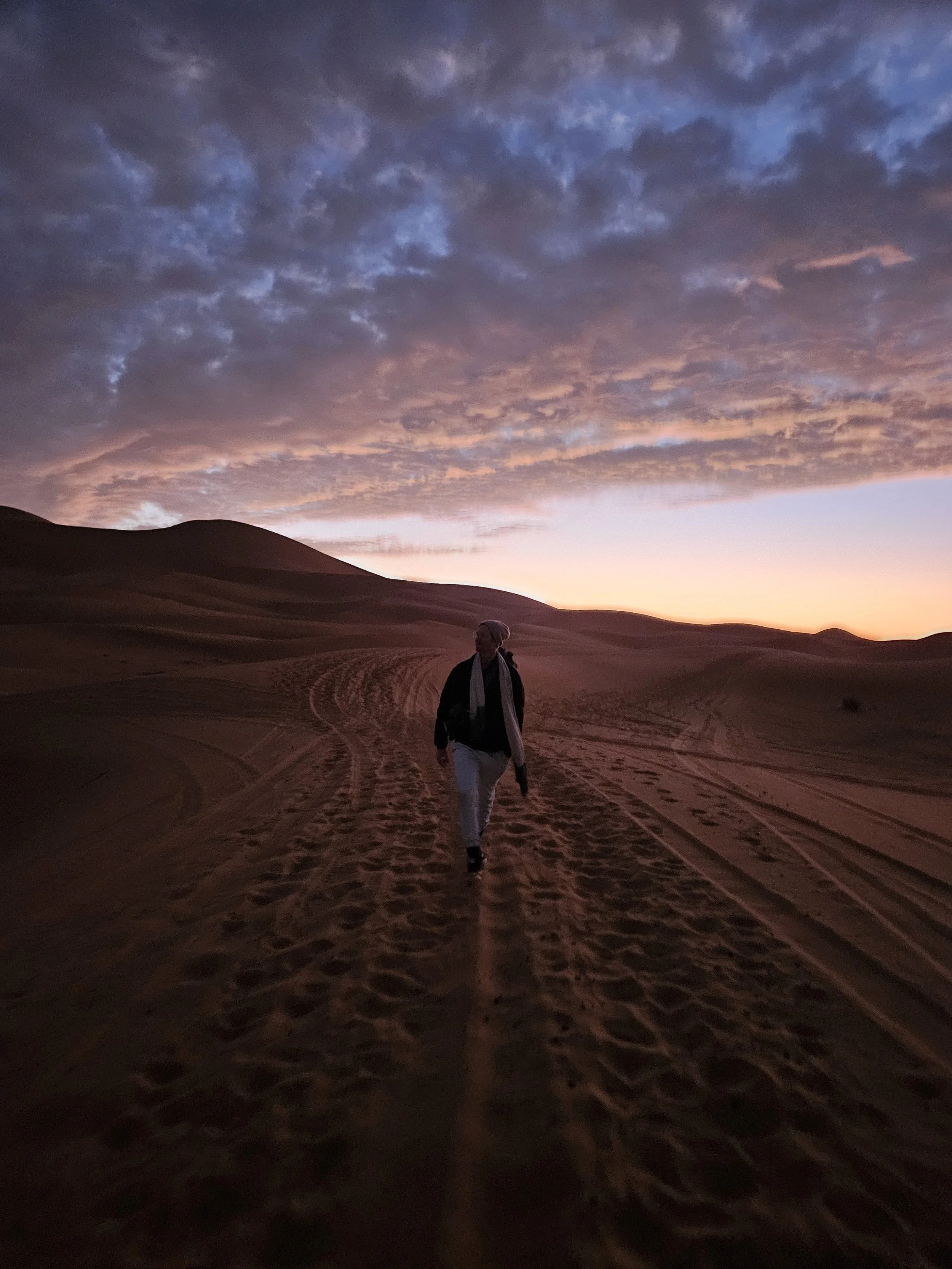
Jesse finishing the trek across the desert
How Long Should You Stay?
We wanted to stay two nights and really wish we hadn’t been scammed out of the second night.
When you arrive, you’ll have roughly three hours of daylight to enjoy the views before the sun sets. Then you leave before sunrise the next morning.
If you’re tight on time, one night will do the trick. But two nights would give you a full extra day to enjoy the desert, sandboarding, taking photos, and soaking it all in without feeling rushed.
What to Wear in the Sahara Desert
This depends heavily on the season. We went in winter and needed winter jackets. In summer, I imagine you’d be sweating like crazy during the day.
Even in summer, desert temperatures drop significantly at night, so always bring something warm.
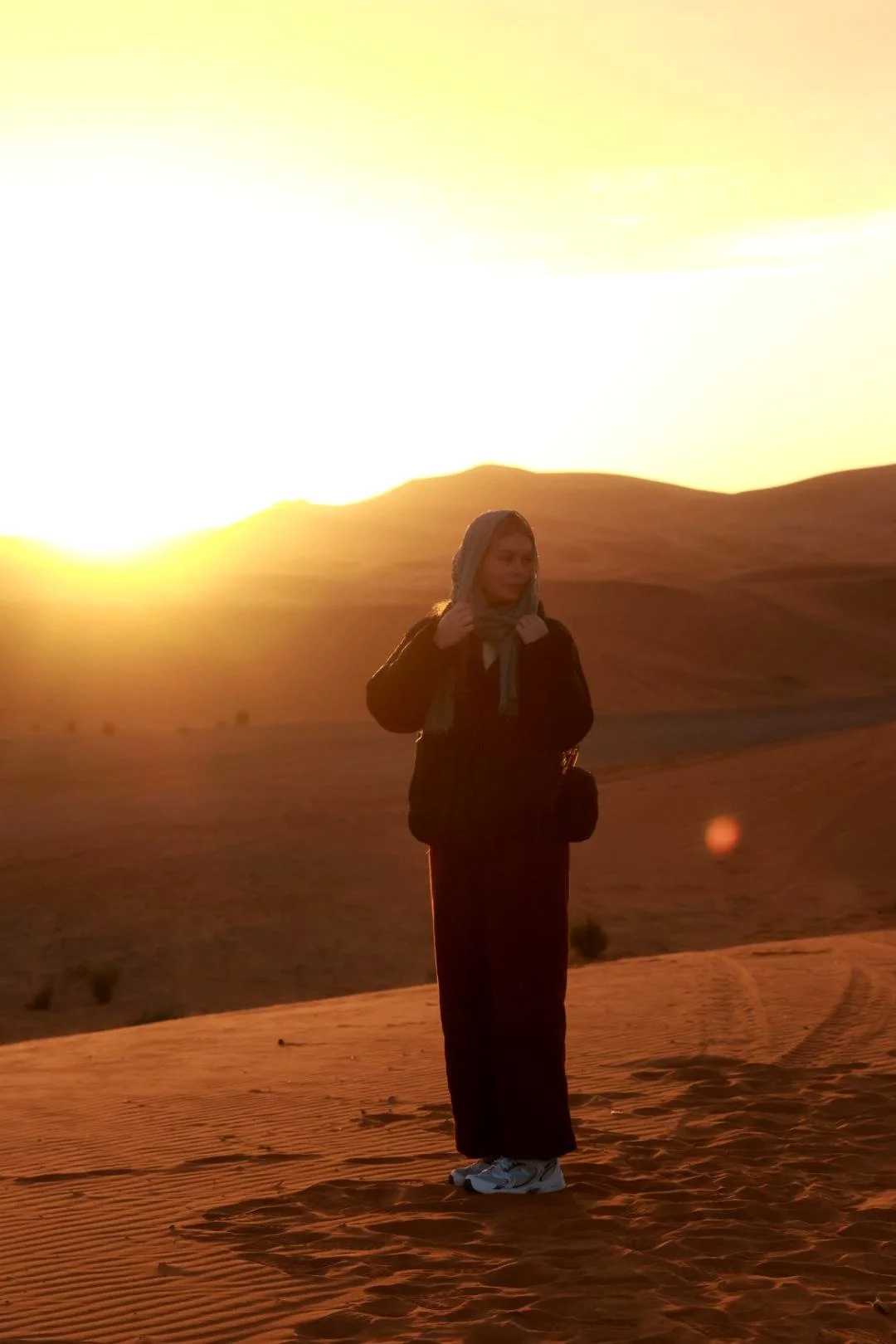
Dressed for the Sahara Desert in Winter
Our recommendations of what to wear in the daytime:
Lightweight long-sleeve shirt - to protect from the sun
Loose breathable pants
Comfortable walking shoes - highly recommend against sandals. The path they take you on is the same path they take everyone on which means there will be camel poop EVERYWHERE
Sunglasses
Hat or headscarf - headscarf makes for great pictures but will also protect you the most if it’s windy
Our recommendations of what to wear in the daytime:
Light jacket or fleece
Long pants
Warm socks
Winter hat and mittens - if it’s winter
Winter coat - if it’s winter
Avoid heavy fabrics and tight clothing. Loose, flowy pieces are far more comfortable.
Choosing the Right Desert Camp
As i’ve mentioned throughout this article, Jesse and I got scammed and here is a little recap of how that happened and what that entailed:
We didn’t book online, we booked through one of the main tour offices located in the main Marrakesh square. While this was a legit tour office, they still managed to scam us. We negotiated and paid in cash however our receipt didn’t specifically mention two nights and luxury camp. It just simply had a name, paid stamp and the location.
When we got to the desert, our camp guide said we only booked one night and if we wanted to stay another night we’d have to pay him directly. It didn’t matter that we had already paid for the full two nights. We refused. We also didn’t get put into the luxury camp when we arrived. Likely because we opted not to pay twice.
Lesson learned: Book online and make sure your confirmation clearly states everything you paid for.
There are generally two categories:
Standard Camps
Basic tents
Shared bathrooms
Lower price
Mid-range / Luxury Camps
Private tents
Real beds
Ensuite bathrooms
Nicer decor
We recommend booking a luxury camp if your budget allows. The comfort upgrade after a long day of travel would have been so worth it. Although we paid for a luxury camp, we were placed in a mid-range and it wasn’t great.
Before booking, check:
Recent reviews
Photos of bathrooms
Whether tents are private
What meals are included
What’s Usually Included on Sahara Tours
Most tours include:
Transportation
Accommodation
Dinner & breakfast
Camel trek
Usually NOT included:
Lunches
Drinks
Tips
Bring small cash for lunches, water, and tipping guides if you choose.
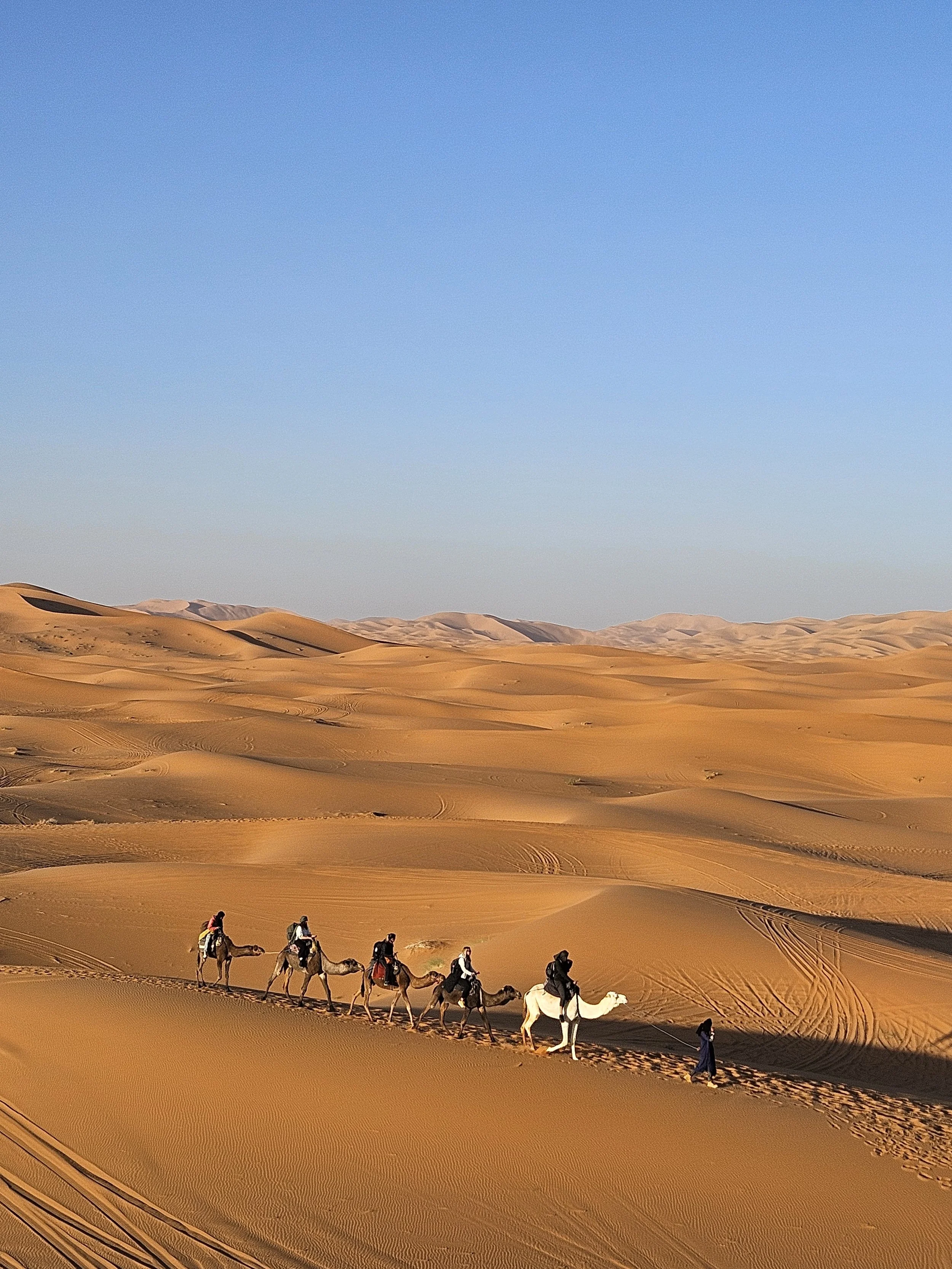
More camels crossing
Common Sahara Desert Scams & What to Watch For
Fake “Luxury” Camps. Photos don’t always match reality. Always read recent reviews.
Surprise Upgrade Fees. Some operators claim your camp is “full” and push paid upgrades on arrival. Confirm your camp name in advance.
Overpriced Souvenir Stops. Tour stops often include shops. You’re not obligated to buy anything.
Camel Photo Fees. Some locals may offer to take photos and then demand payment. Ask first.
Booking through a reputable company with strong reviews minimizes these risks.
Is the Sahara Desert worth it? 1000% yes.
It’s one of those places that feels impossible to fully capture in photos. The scale, silence, colors, and night sky are something you have to experience in person.
If you’re debating whether to include the Sahara Desert in your Morocco itinerary do it. You won’t regret it.
Sahara Desert FAQ
Is the Sahara Desert worth visiting?
Yes, 100%. The Sahara is one of those destinations that truly has to be experienced in person. The massive dunes, silence, night sky, and overall scale are impossible to capture fully in photos. Despite some logistical challenges, it remains one of our most memorable travel experiences.
How do you get to the Sahara Desert from Marrakech?
The most common way is by booking a guided multi-day tour from Marrakech to Merzouga, the gateway town to the Erg Chebbi dunes. Tours typically last either 2 days/1 night or 3 days/2 nights. We recommend the 3-day option so the long drive feels more manageable.
How long is the drive from Marrakech to the Sahara Desert?
The journey takes roughly 9–10 hours total, usually split across two days with overnight stops and sightseeing along the way.
Should I rent a car or book a tour?
While renting a car is possible, we strongly recommend booking a guided tour, especially for first-time visitors. Navigating mountain roads and desert routes can be stressful, and tours remove the logistical challenges.
How many nights should you stay in the Sahara Desert?
One night is enough if you’re short on time, but two nights is ideal. Two nights allow you to enjoy the desert at a slower pace, try activities like sandboarding, and avoid feeling rushed.
Is it better to ride a camel or take a 4x4 to camp?
Most tours offer both. Camel rides can feel like a bucket-list experience but can be uncomfortable. A 4x4 transfer is faster and more comfortable. If given the choice, we’d personally choose the 4x4.
What should you wear in the Sahara Desert?
During the day: lightweight long sleeves, loose pants, sunglasses, and comfortable closed-toe shoes.
At night: warm layers, especially in winter. Desert temperatures drop significantly after sunset.
Does it get cold in the Sahara Desert?
Yes. Even in warmer months, nights can be chilly. In winter, it can get very cold, so pack warm layers.
What type of Sahara desert camp should I book?
If your budget allows, book a mid-range or luxury camp with private tents and ensuite bathrooms. Comfort levels vary widely between camps.
How do I avoid Sahara tour scams?
Book online with reputable companies, read recent reviews, and ensure your confirmation clearly states camp type and number of nights. Avoid vague receipts and cash-only agreements when possible.
Is drinking water provided at desert camps?
Not always. Bring enough water for your stay and confirm what’s included before booking.
What’s usually included in a Sahara tour?
Transportation, accommodation, dinner, breakfast, and a camel trek or 4x4 transfer. Lunch, drinks, and tips are usually not included.
Is the Sahara safe for tourists?
Yes, when traveling with reputable tour operators. Stick with your group, listen to guides, and use common sense.
Don’t forget to check out our other blog posts and follow long for more tips and tricks for all your future travels.
Cheers,
Liv and Jesse
