How to Dress for Morocco: What to Wear for Comfort & Cultural Respect
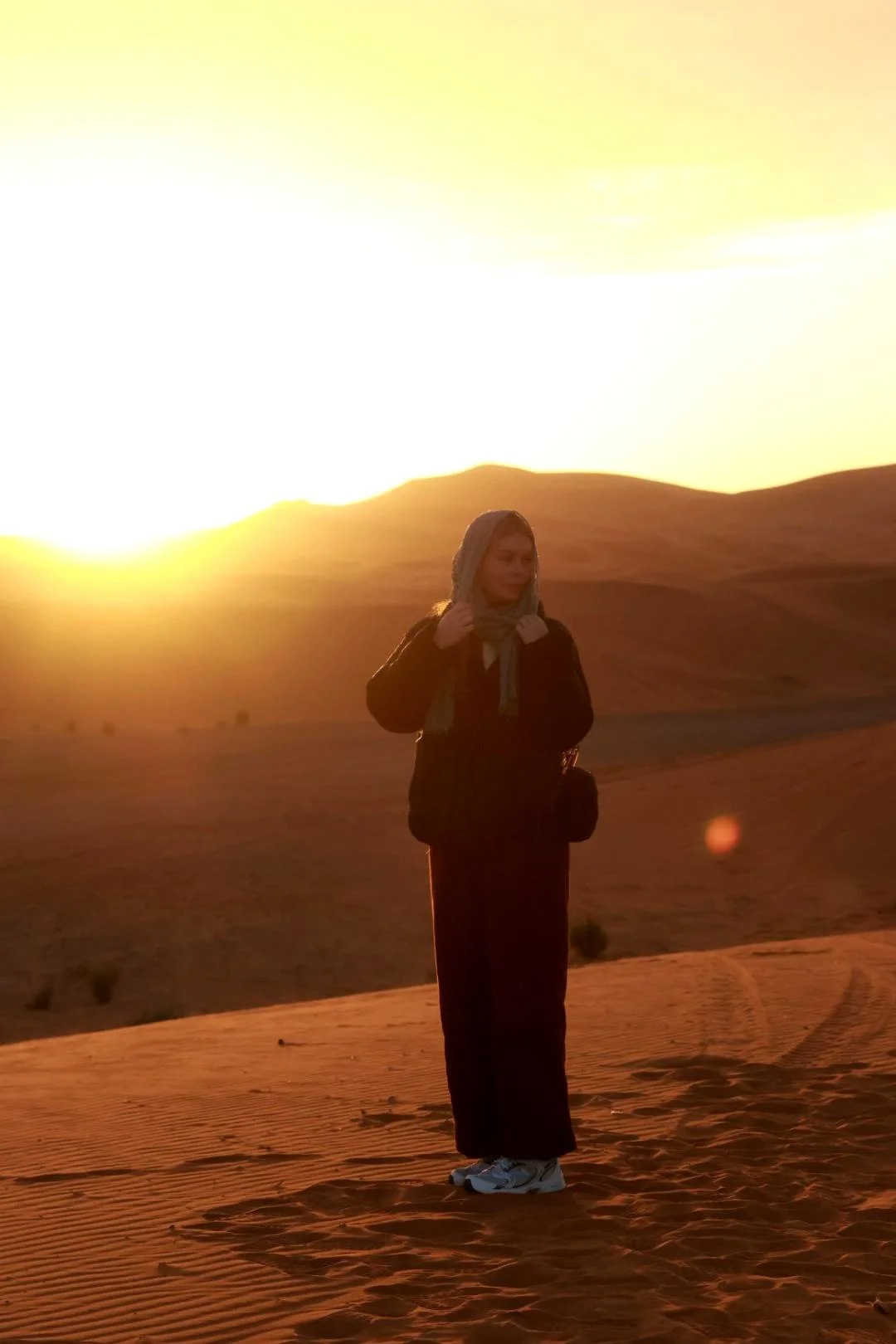
Dressed for a chilly morning in the Sahara Desert
Figuring out how to dress for Morocco was one of the things we overthought the most before our trip and after visiting, we realized it really didn’t need to be that complicated.
Morocco is vibrant, busy, conservative in some places, relaxed in others, and experiences huge temperature swings depending on where you are and what time of year you visit. One minute you’re wandering through a sunny medina, the next you’re freezing in the desert after sunset.
In this guide, we’re breaking down exactly what we wore in Morocco, what we were glad we packed, what we wish we had packed, and what we wouldn’t bring again all based on our own experience.
If you’re also planning a Sahara Desert tour, make sure to check out our full guide: Sahara Desert Tour from Marrakech: Everything You Need & Avoiding Scams, where we share what crossing the desert is really like, what to wear in the Sahara, and how to avoid common tour scams.
How to Dress in Morocco (Quick Overview):
Morocco is more conservative than many Western countries
Loose, breathable clothing is best
Layers are essential
You don’t need to dress fully covered at all times, but modesty goes a long way
Comfort > fashion (with plenty of room for cute outfits too)
Why What You Wear in Morocco Matters
Morocco is a Muslim-majority country, and while tourists aren’t expected to dress like locals, dressing modestly shows respect for the culture and can make your experience more comfortable. You’ll find locals are more friendly and open to conversation. If you’re respecting their culture, they’ll respect you.
We noticed that when we dressed more conservatively:
We received less unwanted attention
We felt more comfortable walking through medinas and the shops
We blended in better
That doesn’t mean you need to overhaul your entire wardrobe but just be thoughtful with your choices.
Best Fabrics for Morocco
Breathable fabrics will be your best friend and preferably ones that don’t wrinkle too much. Unless you’re staying in a luxury hotel you might not find a steamer or ironing board in your room.
We recommend:
Linen
Cotton
Lightweight rayon
Moisture-wicking blends
What Women Should Wear in Morocco
Like most places in the Middle East and Africa, what a woman wears tends to be more of a topic of conversation than what a man wears, so I wanted to make sure there was a section dedicated to this specifically.
Don’t stress too much about it, but as a rule of thumb: if your shoulders and knees are covered and you’re wearing loose-fitting clothing, you’ll likely draw no extra attention.
While in many cities you’ll see local women completely covered head to toe, you don’t need to go this far. I often opted for tops that covered my shoulders, didn’t show cleavage, and went past my knees. I never had an issue.
Tank tops, crop tops, tight shorts, and mini skirts aren’t ideal for most areas, and I’d advise against wearing them.
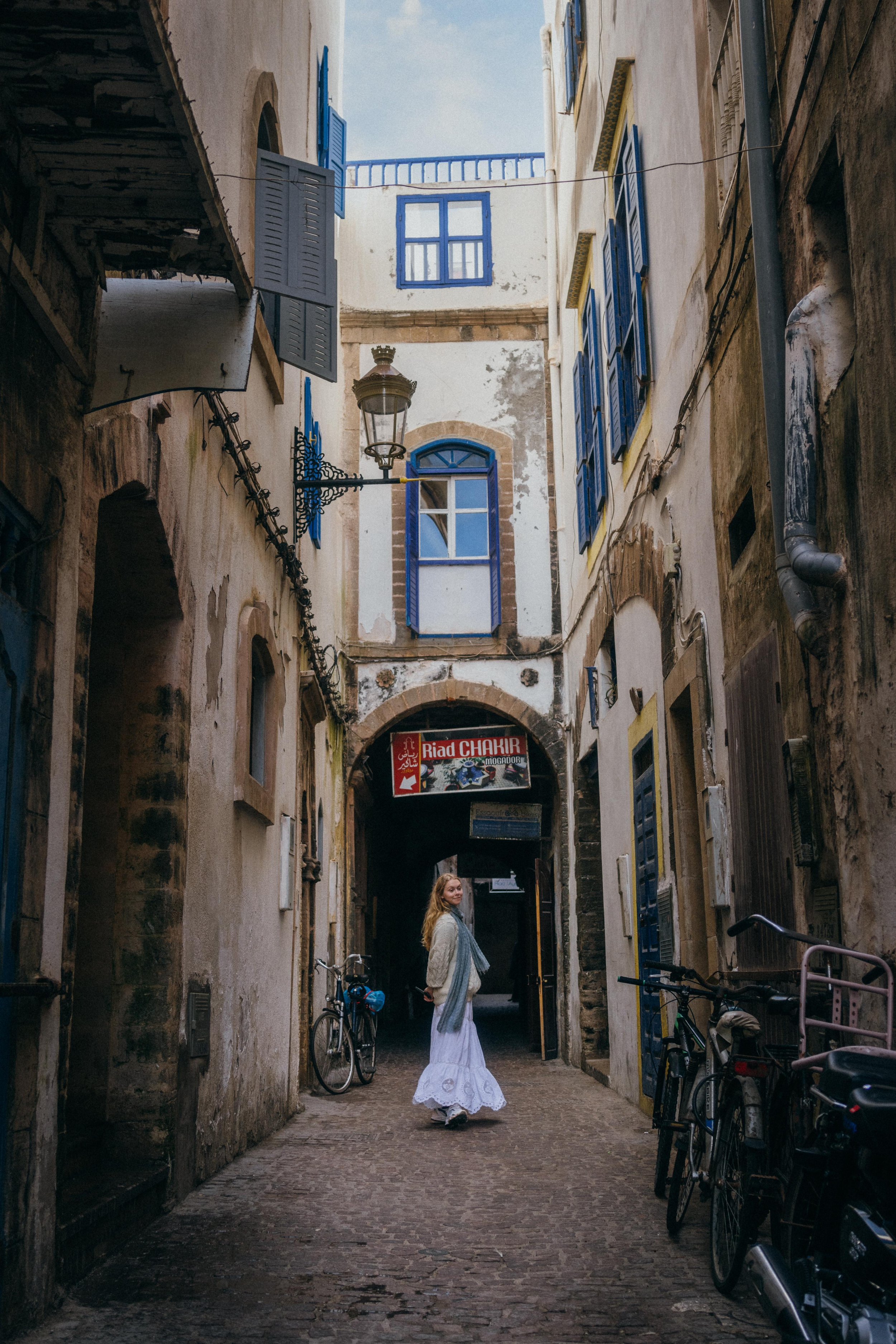
In the Medinas of Essaouira
I’d recommend packing the following bottom options:
Loose trousers
Linen pants
Wide-leg pants
Maxi skirts
Midi skirts
Hiking pants that are tight around your bum are also perfectly acceptable but avoid leggings. I don’t recommend shorts unless they go down to your knees and are loose fitting. I’d stay clear of denim shorts.
I’d recommend the following top and dress options:
Maxi dresses
Shirt dresses
T-shirt
Flowly top
Aim for dresses that cover your shoulders or pair them with a light layer. V-neck and scoop-neck tops are perfectly fine as long as they don’t show cleavage.
What I Loved Wearing Most
Linen pants + tank top + lightweight button-up
Maxi dress + t-shirt + sneakers
Maxi Skirt + sweater + scarf
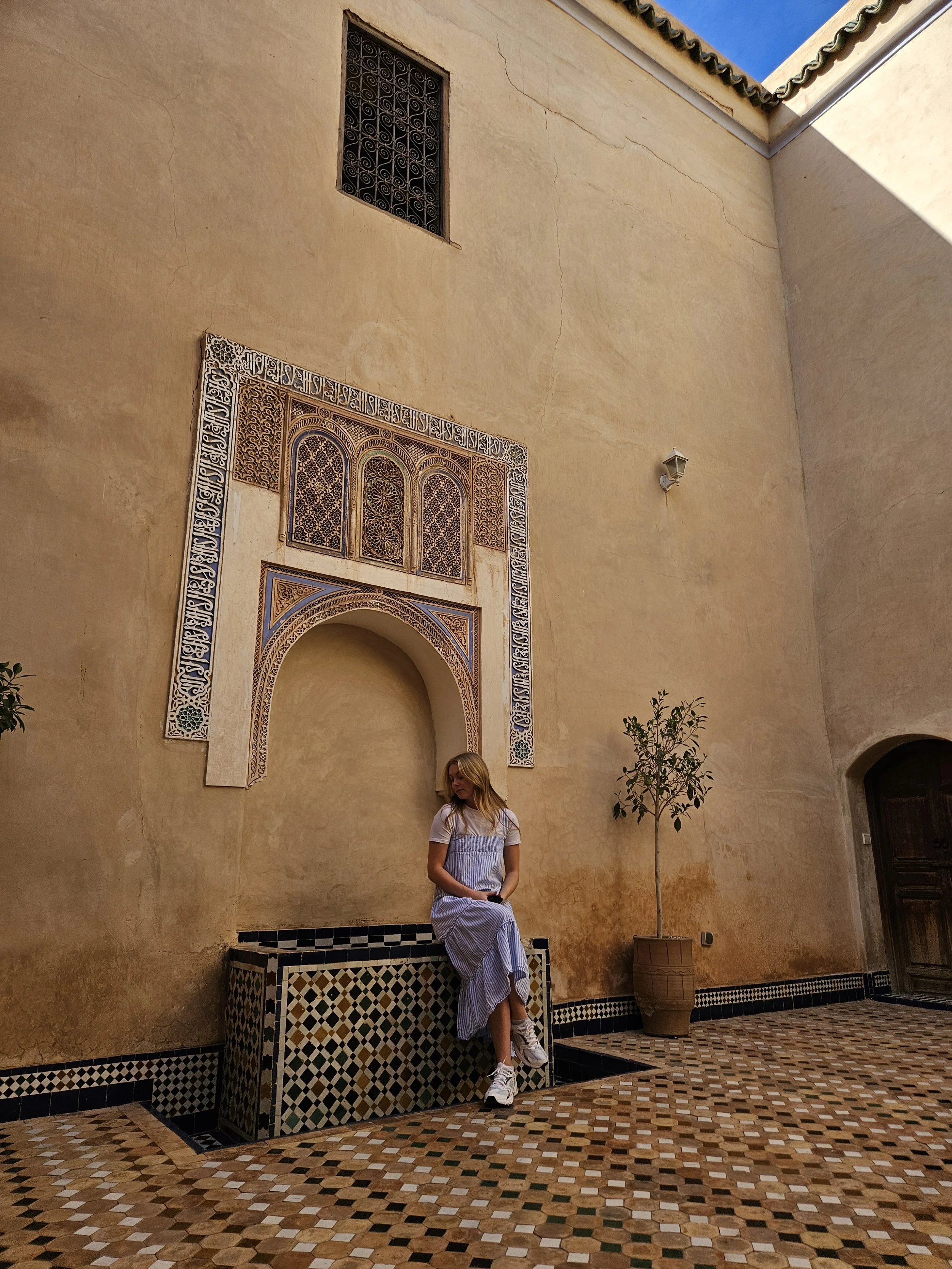
Exploring Marrakesh in my maxi dress and t-shirt
What Men Should Wear in Morocco
Men definitely have it easier when it comes to packing. Generally, there aren’t many strict guidelines for men’s clothing. Jesse wore his everyday outfits and fit in perfectly.
T-shirts
Short-sleeve button-ups
Lightweight long sleeves
Linen or cotton pants
Athletic joggers
Men generally have fewer restrictions, but long pants are still more respectful than shorts in many areas.
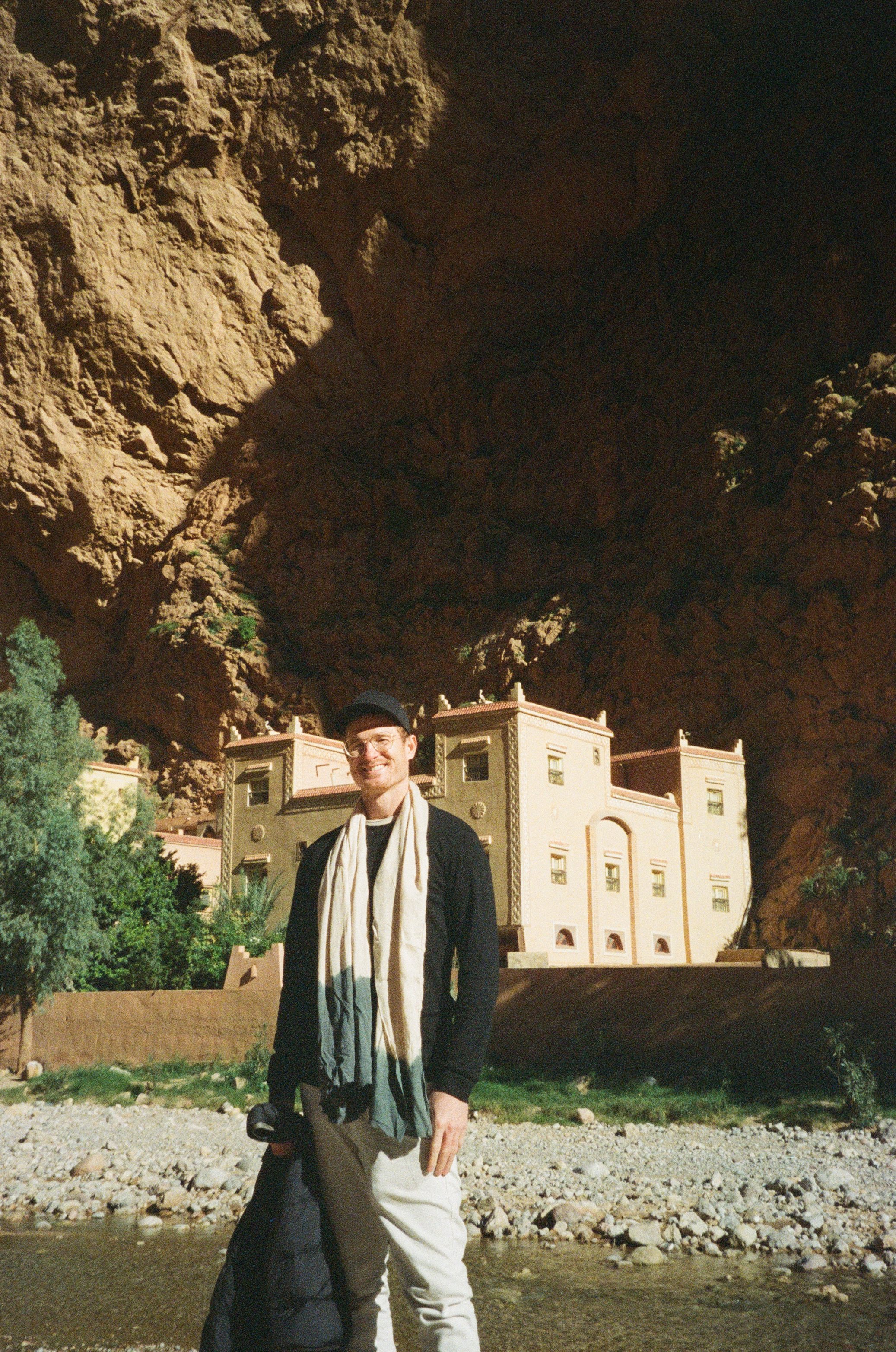
Jesse dressed warmly on our way to the Sahara
What to Wear based on different Moroccan Cities (Marrakesh, Sahara, Coastal Cities)
In general if you’re in an area that is heavily touristy the outfit scrutiny won’t be as bad as the locals are used to people wearing all sorts of different clothing options. Cities are more relaxed, but still conservative. For example, we found walking around the Medinas in Marrakesh was less restrictive and I felt safer to take my sweater off when it got hot out.
This also goes for the beach towns. We spent some time out in Essaouira and it was generally the same restrictions as the cities. Even though you’re by the beach, it’s still not appropriate to show too much skin or wear shorts.
During our Sahara Desert tour, the farther we drove, the more important it became to dress conservatively. You’ll pass through smaller towns and Berber villages where modest dress matters more.
Once at the Sahara itself, I found it didn’t matter nearly as much, since you’re isolated within a tourist camp.
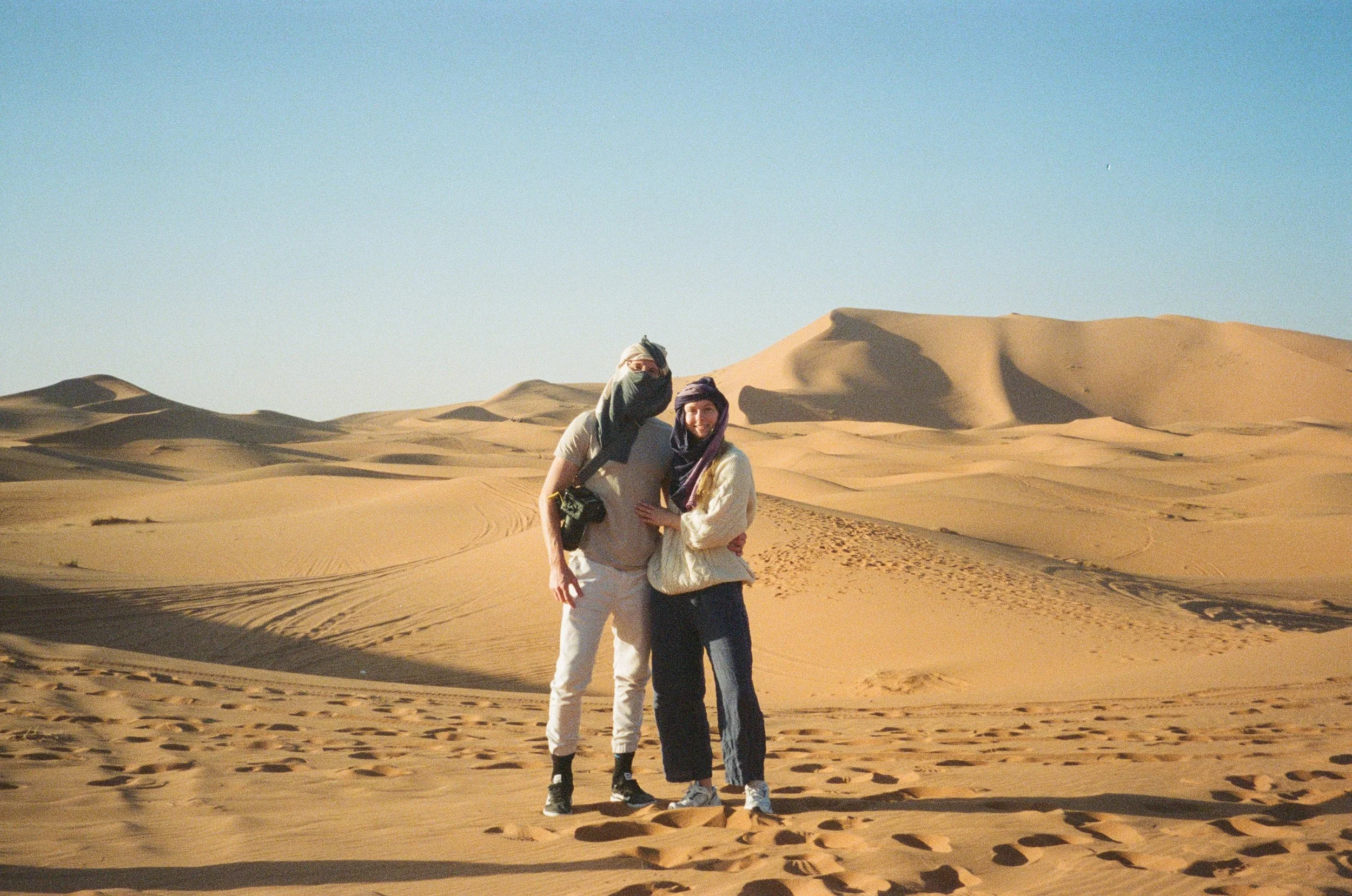
What we wore during our Sahara Desert tour
What Shoes to Bring to Morocco
We packed two pairs each and felt it was perfect:
Comfortable walking sneakers
Sandals
You’ll walk a LOT in Morocco. Prioritize comfort. Roads are often dirt or cobblestone, so fancy shoes or heels aren’t practical.
If you want a nicer option for dinners, ballet flats are a better choice than heels.
Do Women Need to Cover their Hair in Morocco?
No. Tourists are not required to cover their hair unless entering a place of worship.
That said, bringing a lightweight scarf is a great idea. Not only do they look great in photos, but they’re also useful for sun protection and wind. Jesse and I both packed one and wore them often.
Final Thoughts: Dressing for Morocco
Dressing for Morocco is all about balance. Being respectful, staying comfortable, and still feeling like yourself.
If you stick to loose, breathable, modest pieces and pack layers, you’ll be set for almost any situation Morocco throws at you.
And if Morocco includes a desert adventure, don’t forget to check out our Sahara Desert Tour from Marrakech guide for everything you need to know before you go, including how to dress for the desert.
FAQ – How to Dress for Morocco
Do tourists need to dress conservatively in Morocco?
Yes. While tourists aren’t required to dress like locals, modest clothing is respectful and helps you feel more comfortable. Covering shoulders and knees is a good general guideline.
Do women need to cover their hair in Morocco?
No. Hair covering is only required when entering mosques or religious sites. Many travelers still carry a lightweight scarf for sun protection or modesty when needed.
Can women wear dresses in Morocco?
Yes, absolutely. Maxi and midi dresses are great options. Aim for dresses that cover your shoulders and fall below the knees or pair with a light layer.
Are shorts acceptable in Morocco?
Loose shorts that reach the knee are generally okay in tourist areas. Short shorts and tight styles are best avoided.
Is it okay to wear tank tops in Morocco?
Tank tops are better paired with a lightweight button-up or scarf. Tops that cover shoulders are more respectful.
What shoes are best for Morocco?
Comfortable walking sneakers and sandals are ideal. Streets can be uneven and dusty, so avoid heels.
Does it get cold in Morocco?
Yes. Mornings and evenings can be chilly, especially in winter and in the desert. Layers are essential.
What fabrics are best for Morocco?
Breathable fabrics like linen, cotton, lightweight rayon, and moisture-wicking blends work best.
What should I wear in the Sahara Desert?
Loose breathable clothing during the day and warm layers at night. Closed-toe shoes are best for walking in sand.
Can men wear shorts in Morocco?
Men have fewer restrictions, but long pants are more respectful, especially in non-touristy areas.
Thanks for following along on our Morocco journey! Want more Morocco travel tips? Explore our other blog posts and follow along for future adventures.
Cheers,
Liv & Jesse
